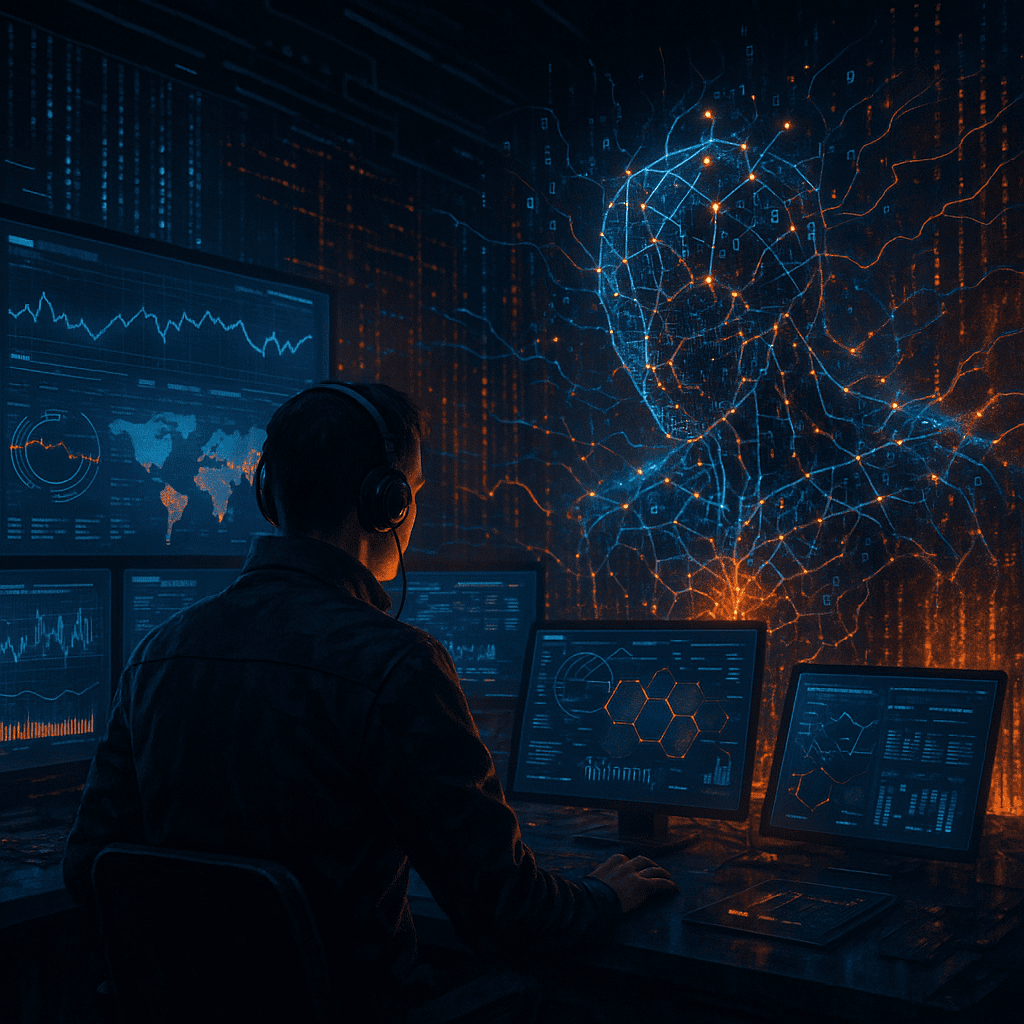
With artificial intelligence transforming everything from healthcare to finance, it’s natural to ask: Will cybersecurity analysts be replaced by AI? AI is fast, scalable, and always “awake”, so why keep humans in the loop?
Here’s the twist: AI might dominate headlines, but cybersecurity is one battlefield where humans aren’t going anywhere. In fact, some reasons for that are pretty strange to make perfect sense once you look closer.
In this post, we’ll explore 9 surprisingly strange (yet true) reasons why cybersecurity analysts still matter, and why AI alone can’t cut it, not even in 2030.
We’ll also include key resources to help you grow your cyber career and stay relevant in this AI-powered future.
1. AI Can’t Interpret Human Intent (Yet)
AI might detect an anomaly but can it understand it? No.
Let’s say an employee downloads a sensitive file at 2 AM. Is it an attack, or just someone in a different time zone pulling late hours? Only a human analyst can apply judgment.
AI can process behavior, but it doesn’t understand context or motives. Until machines can decode human intent with 100% accuracy, analysts are the interpreters of gray areas.
2. Hackers Are… Weird
Hackers are unpredictable, creative, and often deliberately irrational. They use memes in malware, emoji obfuscation, and reverse psychology in phishing emails.
AI excels in patterns. Hackers? They break them.
Cybersecurity analysts thrive in weirdness. They understand sarcasm in phishing, notice irony in code, and catch things AI just finds “statistically irrelevant.”
Strange but true: You need weird humans to stop weird humans.
AI Struggles With Ethics and Regulations
Imagine a system flagging a VIP’s activity as suspicious. Should you alert leadership or quietly escalate?
AI doesn’t weigh ethical dilemmas, political nuance, or organizational politics. Analysts must make tough judgment calls, navigate gray zones, and balance business with compliance and especially under laws like GDPR or HIPAA.
AI might detect a leak. Only a human can decide how to respond without violating legal or reputational frameworks.
4. Cybersecurity Needs Empathy
Strange but essential: cybersecurity is a people business.
- Explaining threats to non-technical staff
- Calming a panicked executive after a breach
- Training teams on phishing prevention
AI doesn’t do empathy, reassurance, or storytelling. It doesn’t read the room. Cybersecurity analysts must build trust, communicate clearly, and coach human behavior—none of which AI does well.
5. AI Doesn’t Know What’s “Normal” for Your Org
Every company has unique tools, policies, users, and rhythms. What’s normal for a finance firm might be suspicious for a healthcare provider.
AI needs training data to learn norms. But even then, it can’t fully understand what’s “business as usual” in your specific environment.
Cybersecurity analysts know the culture, the systems, and the exceptions. Their instincts are trained, not coded.
6. Attackers Are Using AI Too but, You Need Humans to Fight Back
Here’s the catch: hackers use AI too. From deepfake voice scams to automated vulnerability scanning, threat actors are leveling up fast.
So what happens when AI fights AI? A stalemate.
Humans must step in to outthink, outmaneuver, and out-psych the other side. Analysts exploit attacker habits, set traps (like honeypots), and use lateral thinking AI simply doesn’t possess.
Strange logic: Only a human chess player can outwit a machine-assisted hacker.
7. AI Still Produces Tons of False Positives
Ask any SOC analyst: AI generates an overwhelming number of false alarms. While ML helps, AI still flags harmless anomalies—burning time and energy.
Enter the human:
Analysts validate threats, prioritize incidents, and fine-tune systems so teams don’t drown in alerts. Without human oversight, AI becomes noisy and unreliable.
✅ A trained analyst can spot “real” issues buried under 1,000 false flags.
8. Cybersecurity Careers Aren’t Just About Hacking
Most outsiders think cybersecurity = hacking. But the field spans:
- Governance, Risk & Compliance (GRC)
- Cloud security
- Penetration testing
- Threat intelligence
- Security architecture
Many of these roles require strategic thinking, policy creation, and human communication—skills AI doesn’t possess.
🔗 Want to explore which path suits you best? Read: Which Cybersecurity Field Is Best in 2025?
9. Humans Are Better at… Being Human (Strangely Enough)
When everything’s on fire—a major breach, ransomware attack, or insider threat—you don’t want a chatbot leading the response.
You want calm, confident professionals who:
- Lead the incident response
- Speak with stakeholders and media
- Make judgment calls in real-time
- Stay adaptable when rules break down
Machines may be fast. But only humans can be decisive, ethical, and creative when the stakes are sky-high.
Cybersecurity Analyst in the Age of AI
So if you’re asking: “Is cybersecurity still a good career in 2025?”
The answer is an emphatic YES.
- 🔒 Global demand is rising
- 💰 Analysts earn $90K–$180K depending on role/specialty
- 📚 Certifications still matter (CISSP, CEH, Security+, etc.)
- 🌐 Roles are evolving, not disappearing
Start your path here:
🔗 7 Must-Have Cybersecurity Certifications to Launch Your Career in 2025
🔗 7 Reasons Why Cybersecurity Is Not Going to Be Obsolete
FAQs
1. Can AI fully automate cybersecurity in the future?
Not realistically. AI can assist but lacks judgment, ethics, and real-world adaptability.
2. What will AI change in cybersecurity jobs?
It will automate repetitive tasks, freeing analysts to focus on strategy, leadership, and complex investigation.
3. Should cybersecurity professionals learn AI?
Absolutely. Understanding AI tools is a great way to future-proof your role and increase your impact.
4. What’s the best path for cybersecurity in 2025?
Consider cloud security, threat hunting, or governance. Learn more here.
5. How do I get started in cybersecurity?
Check this guide: 7 Must-Have Certifications
In Conclusion
AI is powerful, but cybersecurity is more than just logic. It’s chaos, psychology, politics, and instinct. That’s why the human analyst still matters. Strange as it may sound, it’s our quirks, ethics, empathy, and creativity that make us irreplaceable.
Cybersecurity isn’t going anywhere even with AI, it is never about competing with it, it’s about how good can we put it into use.
Ready to embrace the future, not fear it?
Explore more expert insights and career guides at securitywalay.com/blog